The Master Guide to Professional Public Interest Legislative Advocacy

Most people believe that passing a bill requires a law degree or an expensive firm, but the most enduring changes often begin with a well-organized community and a principled strategy. You've likely felt the frustration of seeing urgent community needs stall because the legislative process feels like a closed door. It's exhausting to watch critical voices get marginalized by the complexity of government structures or the lack of a clear roadmap for change. Effective public interest legislative advocacy is a leadership discipline that bridges the gap between people and policy through professional gravitas and strategic planning.
This guide provides the frameworks you need to transform community needs into national policy. You'll gain a clear understanding of the legislative process and a strategy for building credible government partnerships. We'll explore a framework for civic mobilization that empowers your organization to lead with authority and conviction. While we don't provide legal representation or lobbying registration, we offer the seasoned mentorship required to navigate these systems. You'll finish this guide with the tools to turn your mission into a sustainable reality for the people you serve.
Table of Contents
Understanding the Landscape of Public Interest Legislative Advocacy
Public interest legislative advocacy is more than just a reaction to injustice; it's a proactive instrument for shaping the future of our society. While many view it through a narrow legal lens, it is actually a strategic discipline focused on the collective good. For organizations aiming for systemic impact, professional advocacy provides the structure needed to move beyond temporary relief and toward permanent, policy-driven change. It requires a blend of seasoned authority and community-oriented warmth to turn a shared vision into a legislative reality.
An advocate serves as a vital bridge between the grassroots and the halls of power. They translate the lived experiences of community members into the technical language of drafted legislation. This process ensures that the people most affected by a policy are the ones who help design its core components. By building these connections, we move away from top-down governance and toward a more inclusive, representative model that commands respect in both the boardroom and the community center.
The Core Pillars of Effective Advocacy
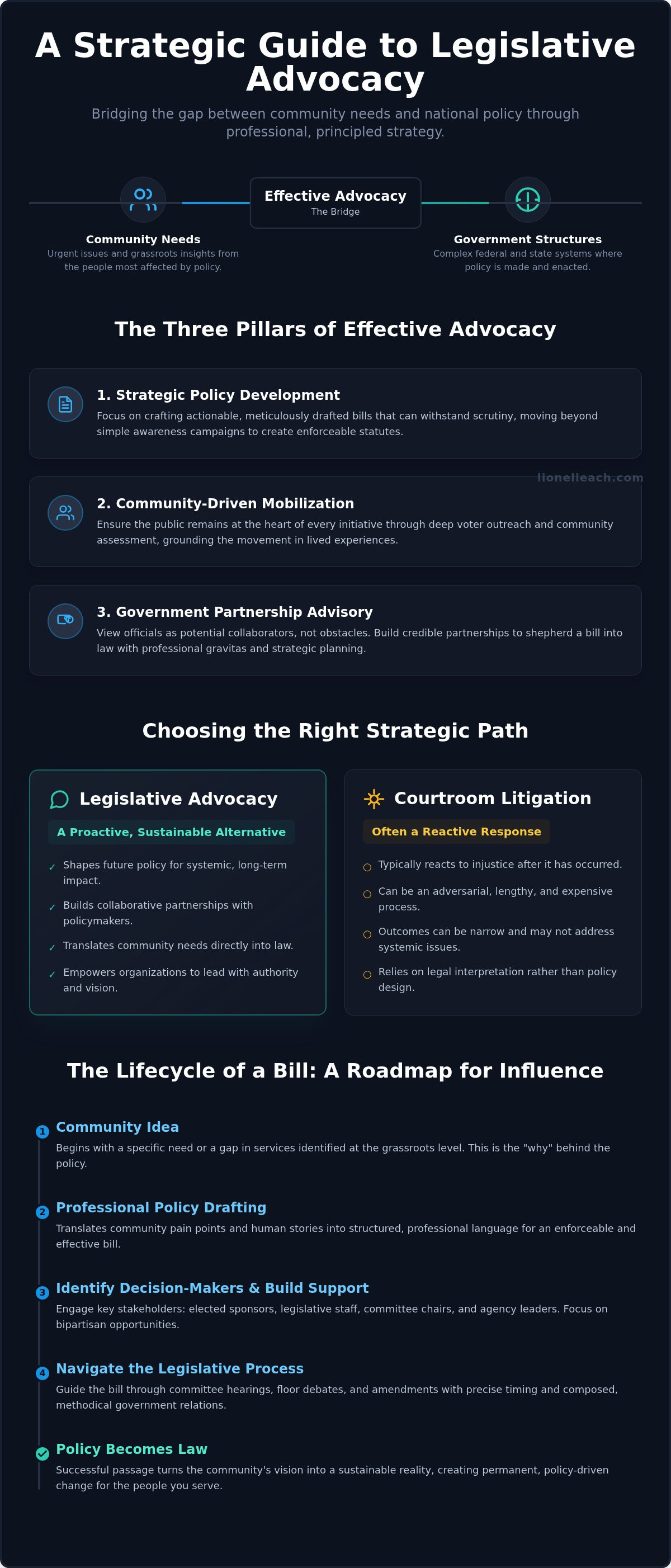
Success in this field rests on three fundamental pillars that transform a simple idea into a national standard. First, strategic policy development focuses on crafting actionable bills rather than just raising awareness or repeating slogans. It's about the meticulous work of drafting language that can withstand scrutiny. Second, community-driven mobilization ensures the "public" remains at the heart of every initiative. This involves deep voter outreach and community development strategy to keep the movement grounded. Finally, Understanding Advocacy in the context of public interest legislative advocacy requires a government partnership advisory approach. This means viewing officials as potential collaborators who can help shepherd a bill into law, rather than treating them solely as obstacles to be overcome.
Why Advocacy Matters in 2026
The legislative environment has become increasingly complex, with federal and state structures requiring more transparency and precision than ever before. In 2026, navigating these layers demands a clear roadmap and a focus on long-term impact over fleeting trends. We're seeing a significant shift toward community-led policy design, where grassroots insights are prioritized in high-level discussions. Many mission-driven leaders hesitate because they think they need a law firm, but advocacy is a leadership discipline accessible to anyone with a principled mission. It's about real-world experience, negotiation, and the steady guidance of a seasoned mentor. By focusing on organizational growth and collaborative integrity, you can bridge the gap between community needs and sustainable policy success.
The Mechanics of Influence: Navigating Government Structures
Understanding the legislative environment is the first step toward achieving systemic impact. Influence in the public sector isn't about aggressive tactics; it's about a composed, methodical approach to government relations. Effective public interest legislative advocacy requires a deep understanding of how power is distributed across federal, state, and local levels. Each layer has its own set of rules, rhythms, and key stakeholders who must be engaged with precision and respect.
The lifecycle of a bill begins long before it reaches a committee hearing. It starts as a community idea, born from a specific need or a gap in existing services. From there, it must be refined into a professional draft that aligns with current policy frameworks. Identifying the right decision-makers is critical. This includes not just the elected officials who sponsor the bill, but also the legislative staff, committee chairs, and agency leaders who manage the technical implementation. Timing is equally vital. For example, during the 2026 session, the federal focus on items like Budget Reconciliation 2.0 or the reauthorization of the Surface Transportation bill creates specific windows where new initiatives can gain traction or face significant competition for attention.
Drafting Successful Legislation
Transforming community pain points into professional policy language is a delicate task. It requires translating human stories into structured, enforceable statutes that solve problems without creating unintended consequences. Successful policy is never an accident; it is the result of deliberate planning that anticipates challenges before they arise. To build sustainable support, advocates must look for bipartisan opportunities. By focusing on shared values like economic growth, community safety, or organizational efficiency, you can create a broad coalition that transcends traditional political divides.
Navigating Complex Policy Frameworks
Identifying the correct legislative levers for your goal is essential for progress. Sometimes a local ordinance can solve a problem more quickly than a state law, while other issues require federal intervention to ensure national consistency. Building trust within these systems depends on transparency and integrity. For those seeking to refine their approach, engaging with a government partnership advisory can provide the necessary strategic clarity. Strategic briefings serve as the primary tool for persuading partners. These briefings should be concise, data-driven, and focused on how the proposed policy benefits the collective good. When you present a well-researched case with a calm and reassuring cadence, you position your organization as a credible and reliable partner in the legislative process.
Advocacy vs. Litigation: Choosing the Right Strategic Path
Many mission-driven leaders assume that systemic change only happens inside a courtroom. Impact litigation is a powerful tool, but it's often a reactive response to harm that's already occurred. Professional public interest legislative advocacy shifts the focus from winning a single case to designing permanent, proactive solutions. It's the difference between treating a symptom and curing the underlying condition. Legislative work allows you to define the rules of engagement before a conflict arises, ensuring that community protections are built into the fabric of the law. It's essential to understand when you need a strategist rather than a lawyer. While legal counsel is vital for interpreting existing statutes, a strategic advocate is necessary for creating new ones. We specialize in the latter, providing the leadership and organizational growth strategies required for legislative success. Please be aware that our services do not include legal representation or lobbying registration.
The human element of policy-making often carries more weight than legal precedent. Judges are bound by previous rulings, but legislators are responsive to the evolving needs of their constituents. This makes community organizing and strategic partnership more effective for long-term change than a courtroom battle. When you build a coalition around a shared vision, you create a movement that's harder to dismantle than a single judicial decision. This approach prioritizes sustainable progress over temporary victories.
The Cost and Time Benefits of Strategic Advocacy
Court battles can span decades and consume vast financial resources with no guarantee of a broad result. A judicial ruling might only apply to a specific set of facts, leaving other communities vulnerable. In contrast, public interest legislative advocacy builds permanent community infrastructure by codifying rights and responsibilities into law. This collaborative approach reduces the friction inherent in adversarial legal battles. By working with government partners instead of against them, you create a foundation for long-term progress that isn't easily overturned by a single appellate decision. It's a more efficient use of resources that focuses on building rather than just defending.
Human-Centric Management in Policy Design
Legal precedent relies on the past, but effective policy design looks toward the future. It prioritizes the voices of those directly affected by a policy over technical legal arguments. This human-centric management ensures that the collective success of the community remains the primary goal. As a seasoned mentor, I guide organizations through the nuances of negotiation dynamics, helping them find common ground without sacrificing their core principles. This approach moves beyond the sterile coldness of legal briefs and embraces the warmth of community-driven leadership. We focus on empowering the collective rather than just winning an individual argument. It's about creating a seat at the table for everyone, ensuring that policy reflects the actual needs of the people.
A Roadmap for Effective Civic Mobilization and Policy Design
Effective public interest legislative advocacy follows a structured path from the community doorstep to the state house. It isn't enough to have a righteous cause; you must have a disciplined framework to move that cause through the machinery of government. This roadmap ensures that your efforts aren't just loud, but impactful. By following a methodical progression, you can transform local concerns into national standards that reflect your organization's core values. Success requires a commitment to the collective good and a willingness to lead with quiet confidence.
The journey toward systemic change involves five critical stages:
Step 1: Community Assessment. We begin by identifying the core issue through deep voter outreach. This ensures the policy goal is rooted in the actual needs of the people.
Step 2: Strategy Design. This phase involves building a community development roadmap that outlines the technical and political steps required for success.
Step 3: Coalition Building. Change rarely happens in isolation. You must unite diverse stakeholders under a principled mission to create a broad base of support.
Step 4: Legislative Engagement. This is the moment of action where you present a strategic briefing to government partners, as discussed in our section on the mechanics of influence.
Step 5: Implementation and Monitoring. Passing a bill is only the beginning. You must ensure the policy delivers real-world results through constant oversight and adjustment.
Voter Outreach and Civic Participation
Designing programs that increase participation is the cornerstone of any movement. We focus on a three-fold approach: Engagement, Empowerment, and Execution. By prioritizing these values, you empower local voices to speak directly to power. Grassroots data is essential because it informs your national policy strategy with authentic evidence. When you present data gathered from thousands of community interactions, your proposal gains a level of credibility that technical jargon alone cannot provide.
Strategic Planning for Community Leaders
Building a sustainable framework for long-term mobilization requires steady leadership and a focus on organizational growth. Civic mobilization is a methodical progression toward sustainable success. It isn't about chasing fleeting trends or aggressive sales tactics; it's about the patient work of negotiation and partnership. If your organization is ready to move from community ideas to drafted legislation, our voter outreach programs can help you build the necessary foundation. We provide the seasoned mentorship needed to navigate high-stakes advocacy with integrity and conviction, ensuring that your mission leads to a lasting legacy for the community.
Scaling Your Mission with Professional Legislative Advisory
Organizations often reach a point where their community impact is limited by the complexity of existing systems. To move from a local idea to a national standard, you need more than just a clear mission; you need a strategic partner who understands the real-world nuances of negotiation. Professional public interest legislative advocacy becomes essential when the barriers to change require specialized expertise in government relations. A trusted advisor doesn't just open doors; they help you build the credible partnerships necessary for sustainable success. This level of advisory ensures that your organization's voice is heard with the professional gravitas it deserves.
With over 35 years of experience in government affairs, Lionel Leach provides the seasoned mentorship required to navigate federal and state structures. This depth of experience allows organizations to avoid common pitfalls in bill drafting and strategic planning. Evaluating an advocacy partner should focus on their track record of integrity and their ability to keep community needs at the center of the policy design. It's about finding a leader who prioritizes the success of the collective over short-term political wins. The strategic discipline of public interest legislative advocacy allows you to transition from reacting to problems to proactively designing the solutions your community needs.
The Lionel Leach Approach: Seasoned Authority Meets Community Warmth
Leveraging deep experience in government partnership advisory, our approach blends professional gravitas with community-oriented warmth. We believe that ethical responsibility and principled leadership are the foundations of effective advocacy. By focusing on strategic application and careful deliberation, we help mission-driven leaders command respect in boardrooms and community centers alike. This isn't about aggressive tactics; it's about a methodical, persuasive rhythm that builds long-term trust with policy makers. We guide you through the complexities of organizational growth, ensuring that every legislative step you take is grounded in sincerity and conviction.
Next Steps for Your Organization
Assessing your current advocacy capacity is the first step toward scaling your impact. You must identify the specific policy goals that will drive your community forward and determine if you have the internal resources to navigate the legislative lifecycle. This involves reviewing your community development strategy and identifying where a government partnership could accelerate your mission. If you're ready to transform your community ideas into actionable legislation, you can contact Lionel Leach for a strategic consultation on your legislative goals. We'll work together to build a sustainable framework for your mission, providing the steady leadership required to achieve lasting results for the people you serve.
Empowering Your Community Through Strategic Action
Transforming community needs into national policy is a journey that requires both principled leadership and a clear strategic framework. We have explored how professional public interest legislative advocacy serves as a proactive tool for systemic change, moving beyond the reactive limitations of litigation to build permanent solutions. By mastering the mechanics of influence and following a disciplined roadmap for civic mobilization, your organization can bridge the gap between local pain points and drafted legislation.
Success in the public sector depends on credible partnerships and a deep understanding of government structures. With over 35 years of real-world experience and a proven track record in bill drafting, I offer the national strategic expertise needed to guide your mission forward. It's time to move from vision to impact with a trusted advisor who understands the nuances of negotiation and the importance of collective success. Partner with Lionel Leach for Strategic Legislative Advocacy and begin the patient work of building a lasting legacy for those you serve. Your mission deserves a seat at the table; let's ensure it stays there.
Frequently Asked Questions
What is the difference between legislative advocacy and lobbying?
Legislative advocacy encompasses the broad range of activities used to influence public policy, while lobbying is a specific, regulated activity focused on influencing specific legislation. Lionel Leach specializes in the strategic framework of public interest legislative advocacy, offering mentorship and advisory services. While we provide the roadmap and policy design needed for success, we don't offer lobbying registration services. Our focus remains on principled leadership and helping organizations navigate government structures effectively.
How can a community organization influence federal policy?
Community organizations influence federal policy by translating local needs into professional, data-driven strategic briefings. This involves building broad coalitions and engaging in government partnership advisory to find common ground with national decision-makers. By presenting authentic grassroots evidence, organizations command respect in high-level discussions. Success at the federal level requires a methodical approach and the steady guidance of a seasoned mentor who understands the nuances of national legislative cycles and negotiation dynamics.
Why is community development strategy important for legislative success?
Community development strategy is essential because it provides the foundational evidence and organizational structure required for policy change. It ensures that every legislative proposal is rooted in a clear, sustainable roadmap for growth. Without this strategy, advocacy efforts often lack the long-term vision needed to convince government partners of a bill's viability. A well-designed strategy demonstrates that your organization is principled, prepared, and deeply committed to the collective success of the people you serve.
What role does voter outreach play in public interest advocacy?
Voter outreach programs provide the vital link between community members and the legislative process. In public interest legislative advocacy, these programs empower local voices and ensure that policy design is informed by authentic grassroots data. By increasing civic participation, you build a mandate that policy makers cannot ignore. This process transforms community needs into a powerful movement, ensuring that the "public" remains the central focus of every strategic pillar your organization establishes.
Do I need a lawyer to draft a bill or change a law?
You don't necessarily need a lawyer to draft a bill or propose a change to the law; you need a strategic advocate with real-world experience. Drafting successful legislation is a leadership discipline that focuses on policy design and community needs. While legal experts interpret existing statutes, a strategist helps you create new ones. It's vital to note that our services focus on strategic advisory and mentorship, and we explicitly do not provide legal representation.
How long does a typical legislative advocacy campaign take?
The timeline for a legislative advocacy campaign varies significantly depending on the complexity of the issue and the legislative level. A federal initiative might follow a multi-year cycle, while local changes can sometimes happen more quickly. It's a methodical progression that requires patience, deliberation, and careful planning. We view advocacy as a marathon rather than a sprint, focusing on building sustainable partnerships that lead to long-term impact rather than chasing fleeting political trends.
What are the benefits of hiring a government partnership advisor?
A government partnership advisor acts as a bridge between your community and policy makers, providing the professional gravitas needed to navigate complex systems. These advisors offer over 35 years of experience in government affairs to help you avoid common pitfalls. By leveraging their expertise in negotiation and organizational dynamics, you can build credible relationships with officials. This advisory ensures your mission is presented clearly, persuasively, and with the quiet confidence required for high-level success.
Can advocacy work be done at a national level for local issues?
Yes, advocacy work at the national level is often the most effective way to address local challenges that mirror widespread trends. By scaling your mission, you can turn a local community idea into a national policy standard. This approach allows organizations to achieve systemic impact that transcends regional boundaries. We provide the strategic expertise needed to navigate all levels of government, ensuring that your local insights inform broader national discussions and drive meaningful progress.



Comments